

Around 74% of breaches involve human behavior, and most learning content for compliance training is created far from where work actually happens. It looks good on paper, but it simply breaks in real situations.
Because on the floor, things move fast, decisions are unclear, and people don’t need more content, they need clarity. In this blog post we dive into the missing link, responsible behaviour, and how you can work with it in your company.
When companies have compliance issue, most companies add:
-
More training.
-
More courses.
-
More content.
Completion goes up, but risk stays the same. Because compliance does not fail in the course. It fails in the moment where someone has to act.
The real problem is not knowledge
Most compliance programs are built to inform and document. They assume that if people know the rules, they will act correctly. But real work does not follow that logic.
-
It happens in situations that are unclear, fast, and under pressure:
-
A supplier offers something unexpected.
-
A customer behaves differently.
-
Data is handled when time is short.
In those moments, employees do not need more information. They need clarity: “What do I do now?”
Policies are clear. Reality is not.
Compliance frameworks are structured, but real work is not. Decisions are made quickly, managers are not always present, and interpretation varies across locations and roles.
A guest asks for an exception, and one employee escalates while another accepts. It is the same situation but a different outcome, and that is exactly where risk enters.
Completion does not equal control.
Most companies measure compliance through completion rates. It creates a sense of control, but it does not reduce risk. People forget what they learn – often up to 90% within a week if it is not used. Two employees can complete the same course and still act differently. That is the gap between training and reality.
What is missing: Responsible Behavior.
Responsible Behavior closes that gap. Not with more topics. Not with more theory. With real situations that mirror daily work. Employees learn what to look for, what to do, and when to escalate. One shared decision framework across AML, ethics, and data use. Same situation. Same response.
Responsible Behavior turns complex topics such as anti-corruption, anti–money laundering, whistleblowing, and AI ethics into clear, role-specific learning that helps people make right decisions in real situations.
Learn more about Responsible Behavior in our Learningstore.
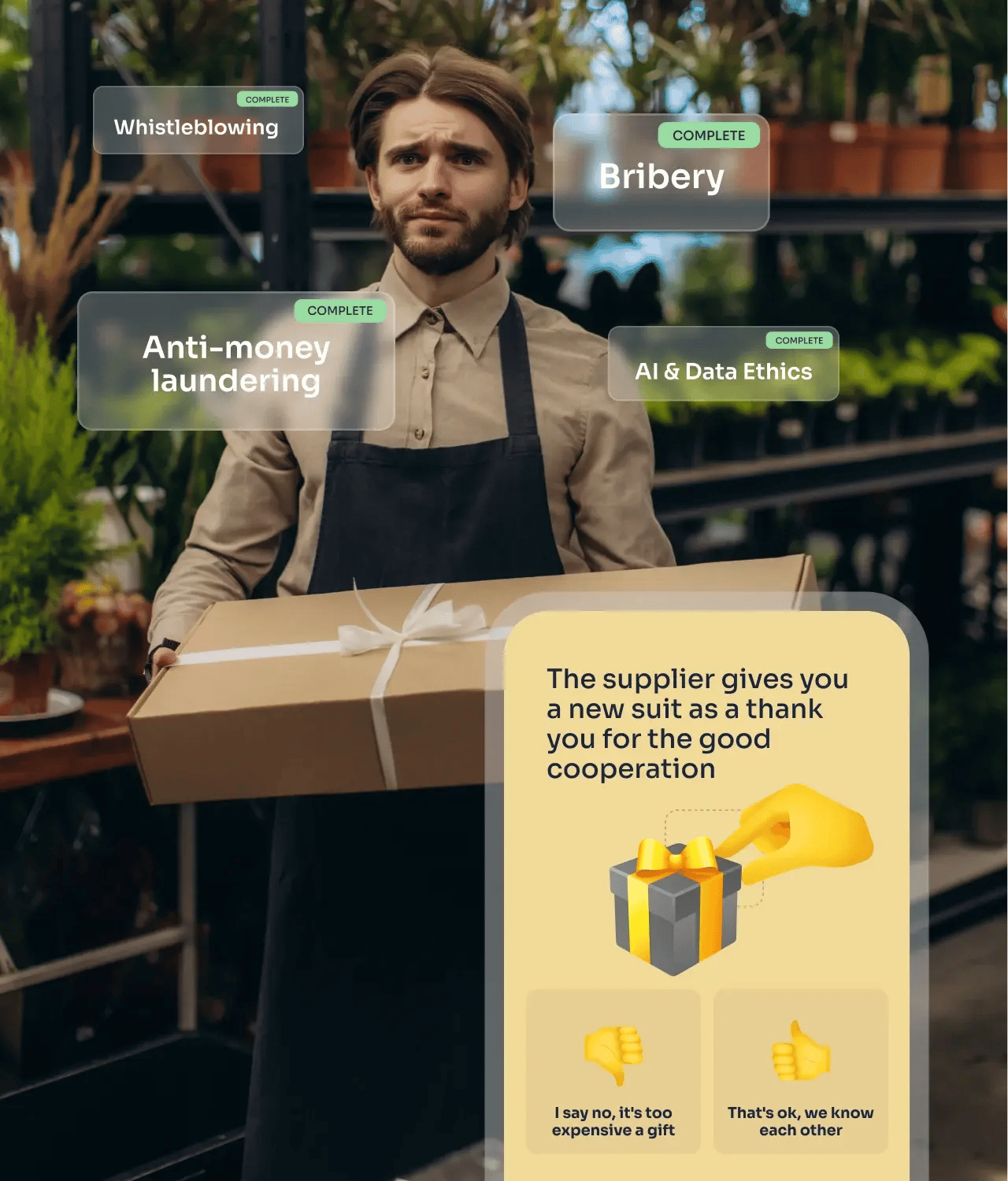
Build it for real operations.
Compliance only works when it works on the floor, in real situations where decisions are made fast. That is why it must be built as short, mobile-first modules, designed for people in motion and used between tasks, not outside of work.
Imagine a production worker who sees a skipped quality check: one stops the line, another keeps going. With a shared decision framework, their response becomes consistent, and that is where risk is reduced. Because in the end, behavior alone is not enough without real control.
Better decisions matter. Visibility creates control.
Managers need to see who is ready, who is certified, and where gaps exist. Without this, compliance stays reactive. Companies spend a significant share of time on manual compliance tasks: spreadsheets, follow-ups, and reporting.
With Workforce Enablement, compliance becomes operational. Real-time visibility replaces manual work.
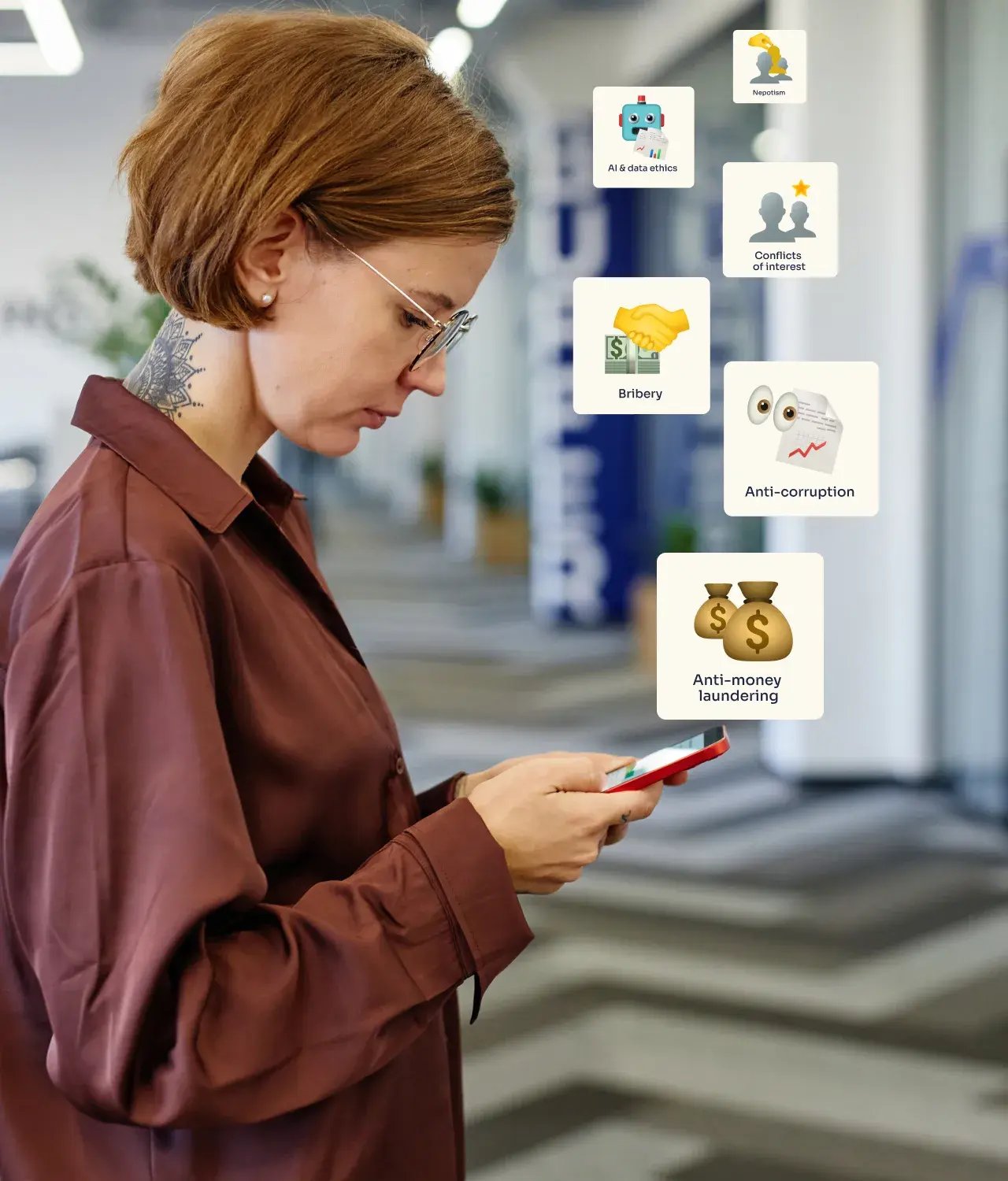
The business impact is clear.
When behavior and visibility work together, decisions become consistent across locations and risks are identified and escalated faster. Audits become easier, Manual work is reduced and compliance stops being something you report. It becomes something you run.
The bottom line.
Most compliance training tells people what the rules are. But risk lives in the moment where something is unclear and someone has to decide. That is where businesses are exposed.
Responsible Behavior is the missing link because it turns policies into action. Not what people know. What they do. That is how compliance starts working in real life.