

Skills management is the discipline of knowing, systematically and continuously, what skills your workforce has, what skills the business actually needs, and where the gap sits between the two. It sounds simple but it can be complex to do it well without the right tools or business-wide focus.
Most companies have a way to manage training, but far fewer have a clear way to manage skills, and that difference matters more than it might seem. Where training management helps you see who was assigned learning and who completed it, skills management gives you a much richer picture by showing
-
who can actually do what
-
how confidently they can do it
-
how that capability shows up in real work
-
and how it connects to what the business needs to succeed
Why this matters now
Organisations with large frontline and mixed workforces cannot afford to guess at this anymore. Skills management, done properly, is what makes workforce enablement possible: connecting what people know, what they can do, and how the business performs into a single, honest picture. That picture is what turns learning from an HR activity into a genuine driver of readiness, consistency, and business results.
Why skills management belongs throughout the organisation, not just HR
For a long time, this distinction was easy to overlook because annual training cycles could still keep up with the pace of change.
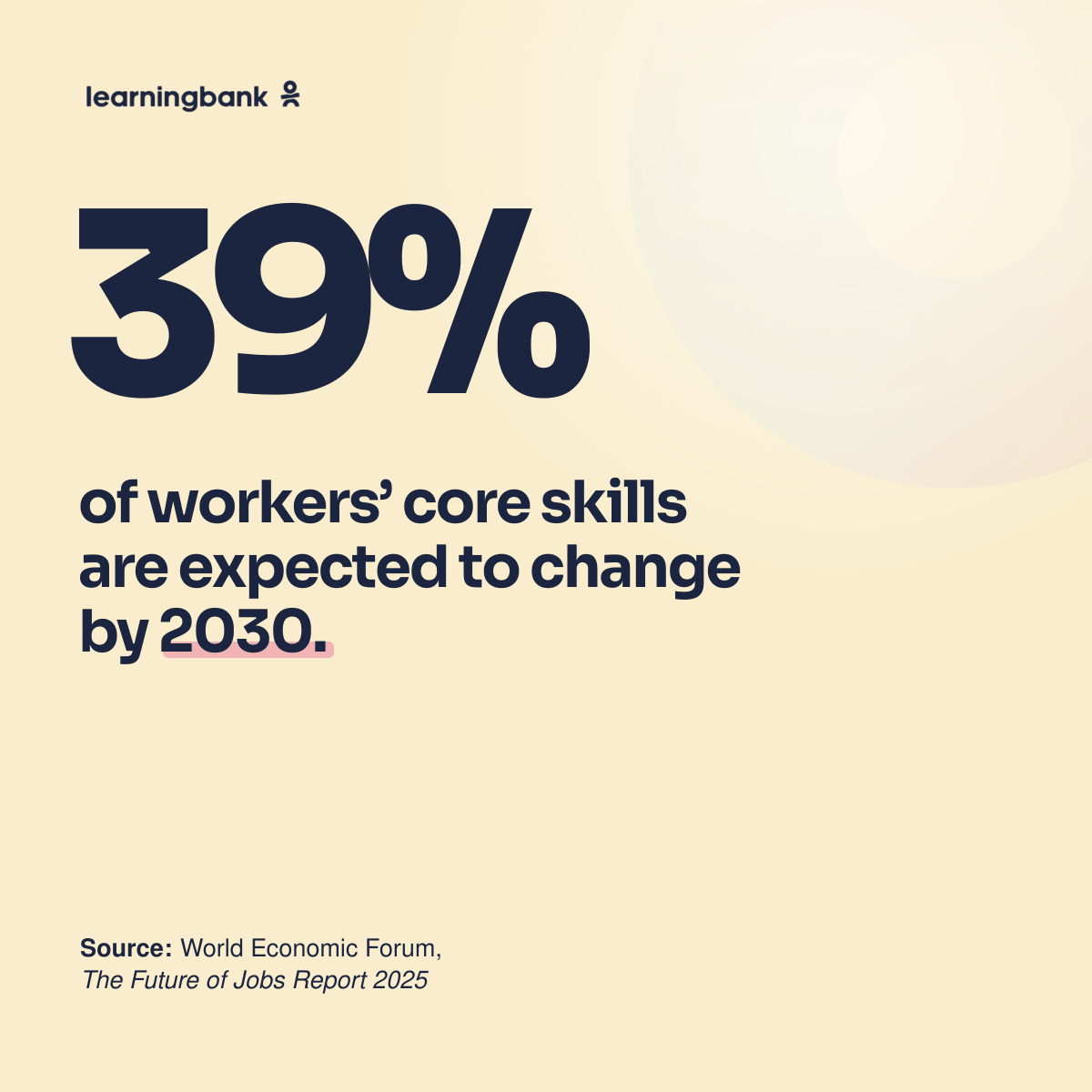
The World Economic Forum expects 39 percent of core workforce skills to be transformed or made obsolete by 2030 (source), and Cedefop’s forecasting points to growing skill shortages across European sectors, from manufacturing to healthcare (source), which means skill requirements are now moving faster than most organisations can track, let alone strengthen at the pace the business needs.
That is why skills management can no longer sit as a purely administrative HR task, but needs to be treated as a genuine business risk function.
Because if leadership cannot answer a simple question like, “Do we have the skills we need, everywhere we operate?” they cannot plan hiring with confidence, forecast compliance exposure clearly, or make sound decisions about where the organisation is strong and where it is exposed.
What skills management software should actually do
A lot of tools claim to do skills management, but in practice they only offer a shallow form of employee skills tracking: A dashboard built on completed learning rather than real capability.
Real skills management software does much more by mapping skills to specific roles instead of generic competency categories, connecting learning directly to skill verification so completed learning and proven capability are not treated as the same thing, and giving managers a live, structured view of team capability across locations and roles rather than a static quarterly snapshot.
The strongest systems also connect skills back to business performance, making it possible to see whether investment in skill development is leading to fewer incidents, faster onboarding, stronger customer experience, and better compliance outcomes.
Learn how our Workforce Enablement Platform helps frontline workforce organisations with skills management. Watch the video below and learn more about how you can work with skills in our platform here.
Skills management is not a course library
It is worth being clear about what skills management is not. It is not a bigger capability catalogue, a more advanced learning management system, or a once-a-year competency review that gets filed away and forgotten. Those are training activities. Skills management sits above them as the operating layer that turns scattered learning into a structured, verified, and business-relevant view of workforce capability.
Ultimately, skills management is not about tracking learning for its own sake
It's about giving the business a clear and current view of workforce capability so managers can support performance, leadership can reduce risk, and organisations can stay ready as skill needs continue to change. Done well, it turns learning from an isolated activity into something the business can actually use to strengthen readiness, consistency, and results.
Build the right workforce with the right competencies at the right time.
With Learningbank you can build the right capabilities across your workforce, so employees, managers, and the business can grow in the same direction.

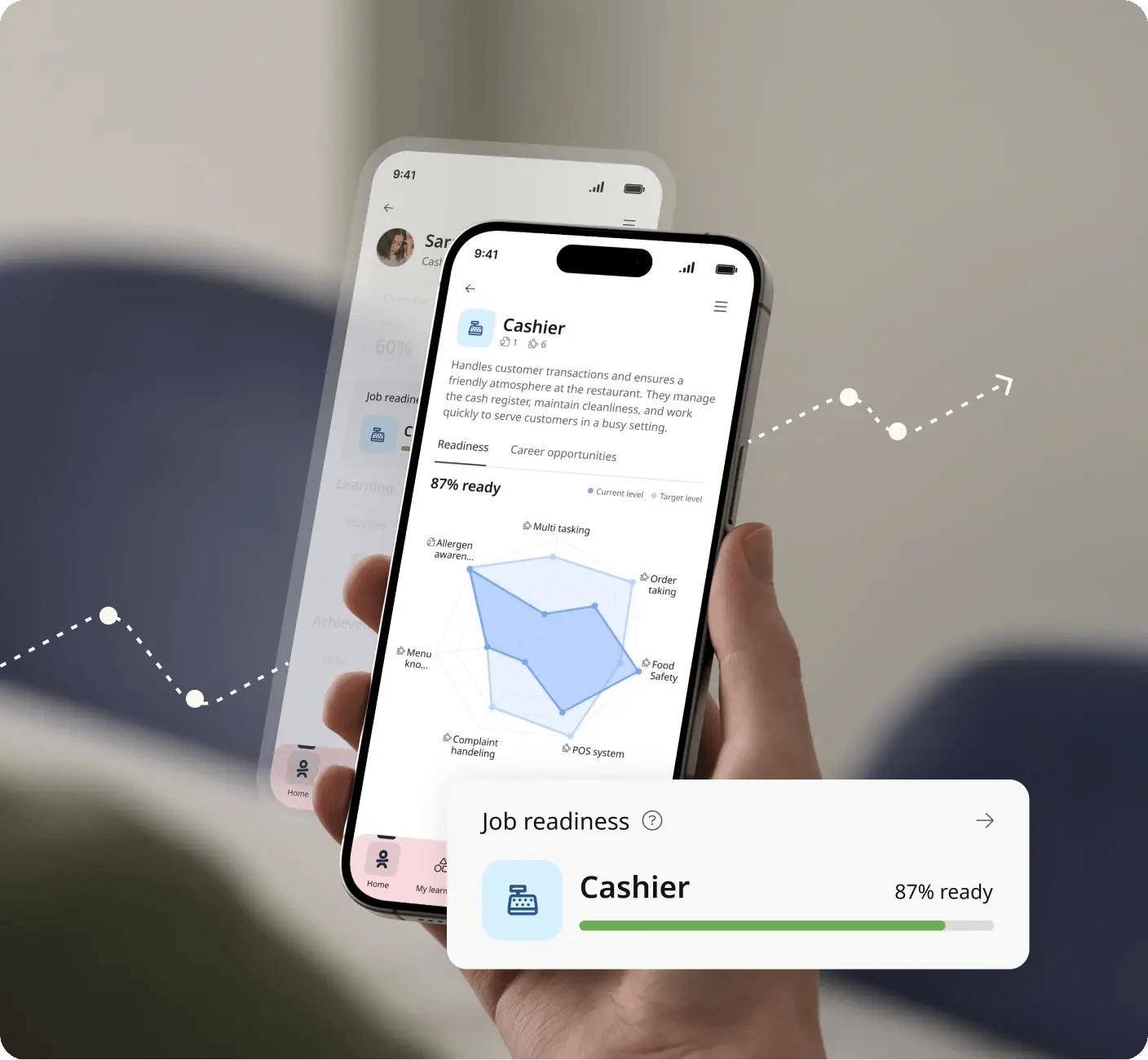 Image: With Skills in Learningbank's Workforce Enablement Platform you get full visibility of your workforce readiness.
If you want to learn more about skills, and how to improve it in your organization, you can read more about soft skills for leaders, how to keep you organization successful with skills development, or dive into how skills visibility is fundamental to your workforce performance.