
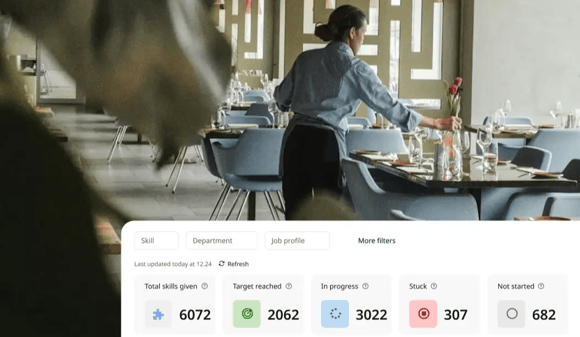
Ask most HR or operations leaders a simple question: which employees are certified to operate machine three, fully signed off on your latest product line, and where are you already short across locations? Most cannot answer with confidence. Not because the issue is unimportant, but because there is no single, reliable source of truth.
That is the workforce skills visibility problem, and it is far more common than most leadership teams realise. Skills sit across disconnected systems, manager memory, and certificates inside a learning management system that rarely supports everyday decisions after onboarding. It is not connected. It is not current. And it does not show, in real time, whether your workforce is ready for what the business needs next.
Deloitte found that mature learning organizations are 4x more likely to use skills-related data to make workforce decisions. That is when skills visibility becomes operationally useful: when it helps leaders act, not just track.
Completions are not the same as capability
Most systems track whether someone completed training. Far fewer can show whether that person can actually do the job the training was meant to support. A certificate proves attendance but it does not prove capability in the moments that matter; on shift, in front of a customer, or on a live production line.
That gap matters for compliance-heavy, multi-site organisations. A 95 percent completion rate may look reassuring on a dashboard, but it tells you very little about whether teams are truly skilled, consistent, and audit-ready across every location. Two organisations can report the same number and have completely different levels of operational control.
Learn how our Workforce Enablement Platform helps frontline workforce organisations with skills management. Watch the video below and learn more about how you can work with skills in our platform here.
Why the gap stays hidden until it costs you
Skills gaps rarely show up neatly or early. They appear when a failed audit exposes a weakness, when a customer notices inconsistent product knowledge, or when a new location underperforms for months before anyone can explain why.
By the time the gap becomes visible in the numbers, the business has already felt the impact.
For multi-site organisations, the risk grows fast. Forty locations often means forty variations of onboarding, forty managers judging readiness differently, and forty different answers to the same question: is this person actually ready? Without a shared, structured view of workforce skills, leaders are making resourcing, hiring, and compliance decisions without the control real capability demands.
Only 34% of employees strongly agree their manager knows what they are working on. Without manager visibility and manager enablement, workforce readiness quickly becomes inconsistent across sites.
 Is your workforce fully skilled, or does skills gaps slow you down?
What visibility actually requires
Real workforce skills visibility means three things working together.
-
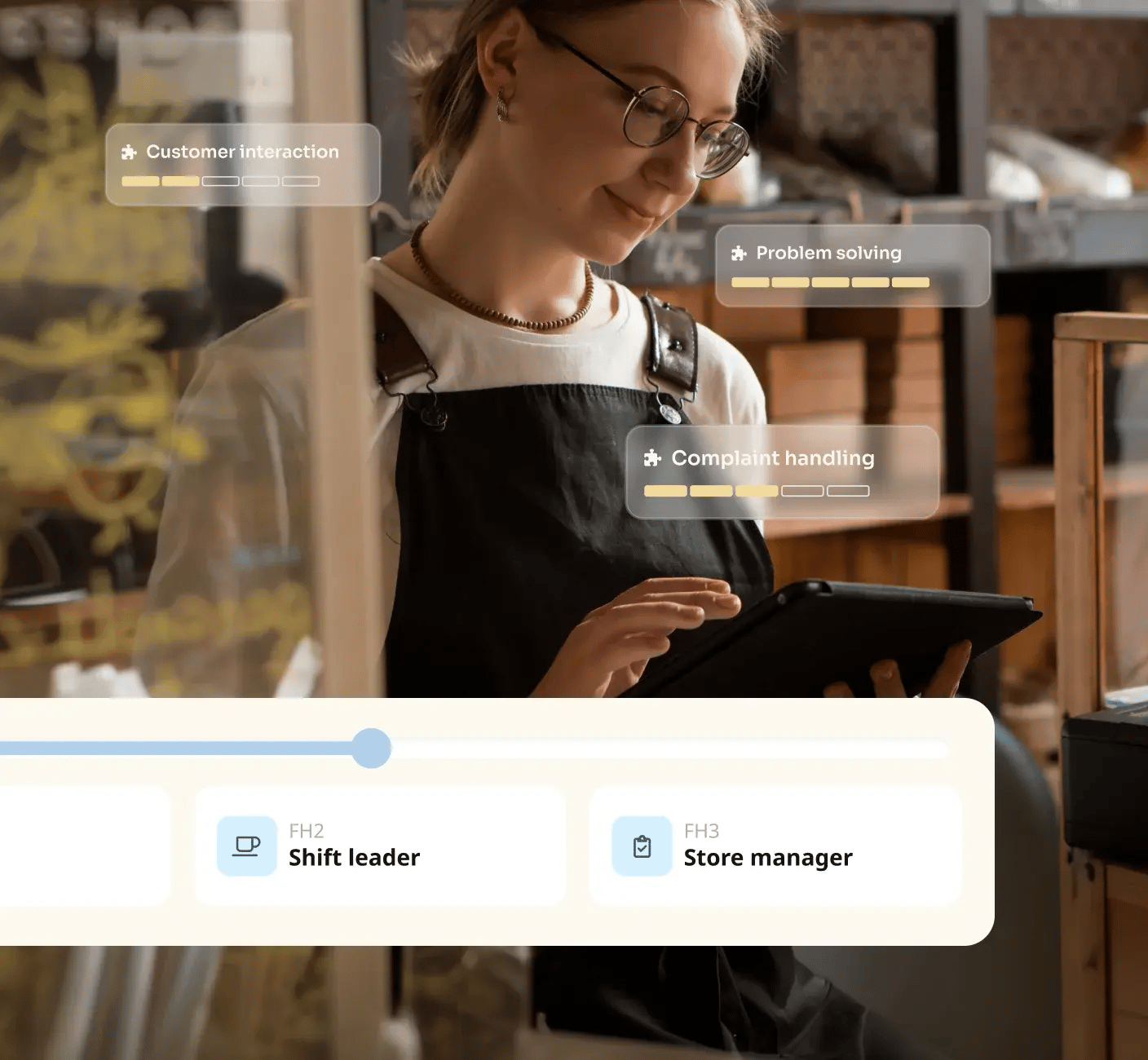
A clear skills framework tied to actual roles, not generic competency language nobody uses on the shop floor.
-
A live, structured way of tracking who has which skills, verified through real work rather than just course completion.
-
And a way for managers to see this at a glance, by team, by location, and by role, so gaps get caught before they become incidents.
This is not an HR reporting exercise. It is an operational necessity. When a store manager can see exactly which team members are certified for a new product launch, or a plant supervisor can see who is qualified to run a machine without pulling an experienced operator off their own line, skills visibility stops being a nice-to-have and becomes how the operation actually runs.
Visibility is the foundation, not the finish line
You cannot close a skills gap you cannot see. Workforce enablement starts with building that visibility, connecting learning, skills, and performance data into one place where managers and leadership can finally answer the question with confidence: do we actually have the skills we need, right now, everywhere we operate. Once that question has a real answer, everything else, from compliance to readiness to business impact, gets easier to manage.
Build the right workforce with the right competencies at the right time.
With Learningbank you can build the right capabilities across your workforce, so employees, managers, and the business can grow in the same direction.

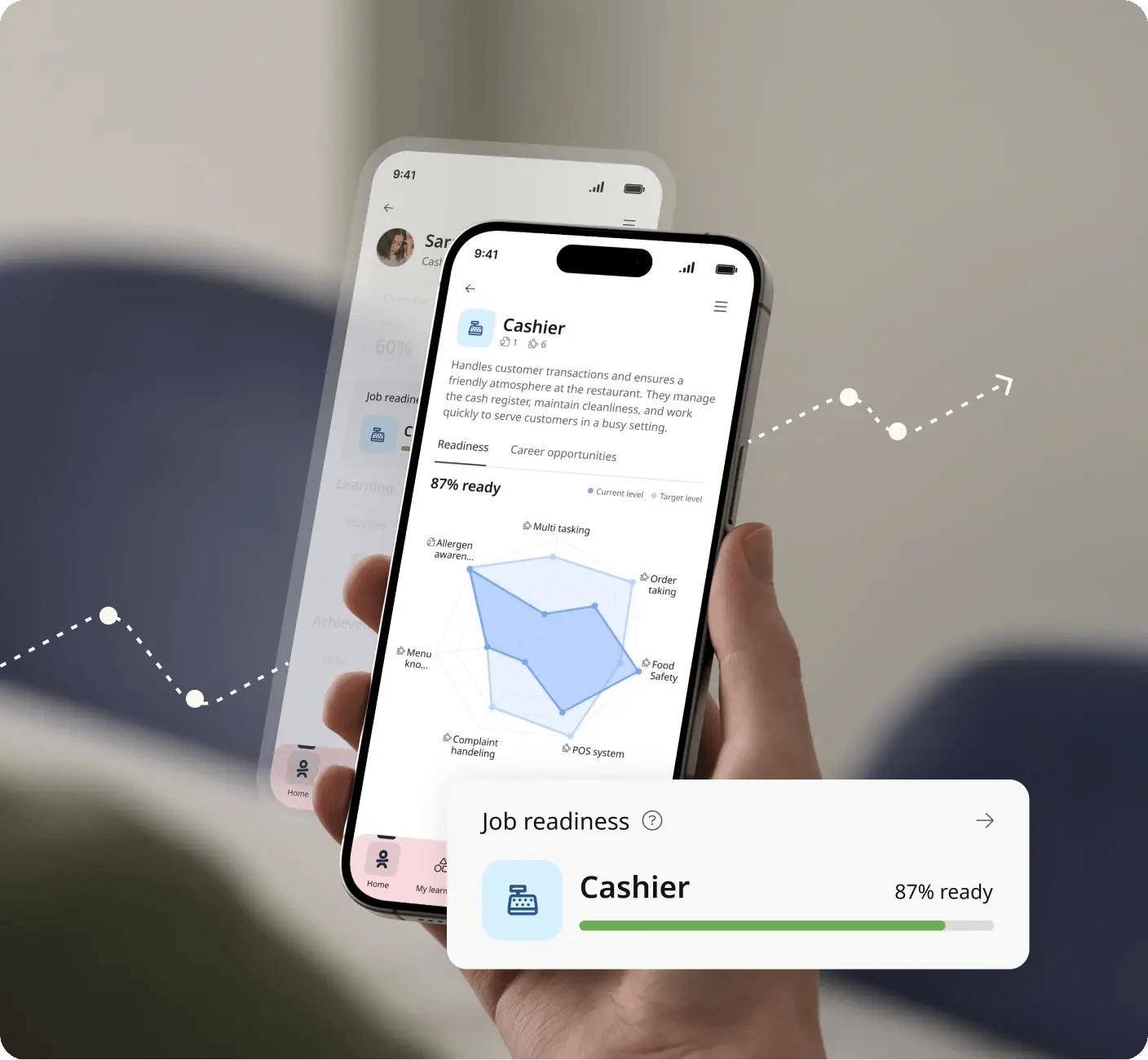 Image: With Skills in Learningbank's Workforce Enablement Platform you get full visibility of your workforce readiness.