
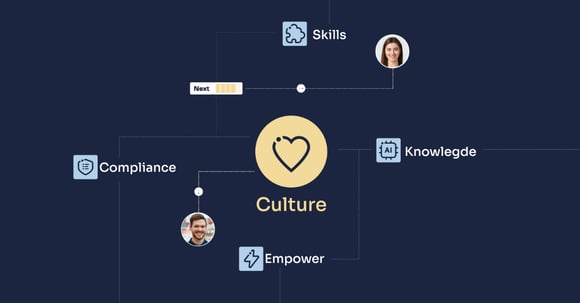
Up to 90% of what people learn in training is forgotten within a week, if it isn’t reinforced or applied. If learning alone really worked, performance wouldn’t struggle as much as it does today. This means that most organizations don’t actually have a learning problem. They have enablement gaps.
In this blog post, we explore the pitfalls of enablement gaps, and why you need to work with Workforce Enablement in your organization.
Enablement gaps quietly shows up everywhere. In onboarding, retention, sales, service, operations, and compliance.
The result? Training gets completed, but business performance stays stubbornly inconsistent. And that's where Workforce Enablement comes in.
What is Workforce Enablement?
Workforce Enablement means giving employees the skills, tools, and support they need to apply and sustain the right behaviors in real work situations.
It goes beyond training by embedding learning into the flow of work with just-in-time resources, feedback, and ongoing coaching. Success is measured by real on-the-job outcomes, not just course completions.
Learning vs. Enablement: Why Performance Still Struggles
Learning is about knowledge. Enablement is about turning that knowledge into consistent, measurable action. In fact, only 10% of skills employees acquire come from formal training, while 70% are learned on the job through experience, practice, and informal support. How do we bridge this gap?
Learning answers:
“Do people know what to do?”Enablement answers:
“Can they actually do it? Fast, confidently, and in the flow of work?”
This difference is where impact lives. Organizations that invest in Workforce Enablement don’t just report higher completion rates. They see reduced time-to-productivity, lower turnover, better customer experiences, and more predictable results across locations and teams.

Do you recognize this in your organization? 5 enablement gaps you need to be aware of
Let’s look at where the enablement gaps appear and how closing them changes outcomes.
1. The onboarding enablement gap: Training happens, but readiness doesn’t
New hires often complete onboarding training. Yet they still lack clarity, confidence, and speed.
-
Time-to-productivity remains high.
-
Managers spend extra time correcting, reminding, and re-explaining.
-
New employees feel uncertain and hesitate instead of acting.
This isn’t an onboarding content problem. It’s an enablement problem.
When onboarding is an automated, role-based journey that’s bite-sized and reinforced on the job, new hires ramp up faster, ask better questions, and start contributing to business goals within weeks.
Impact of strong onboarding enablement:
-
Shorter ramp-up time.
-
Fewer errors in the first critical months.
-
Higher engagement and early retention.
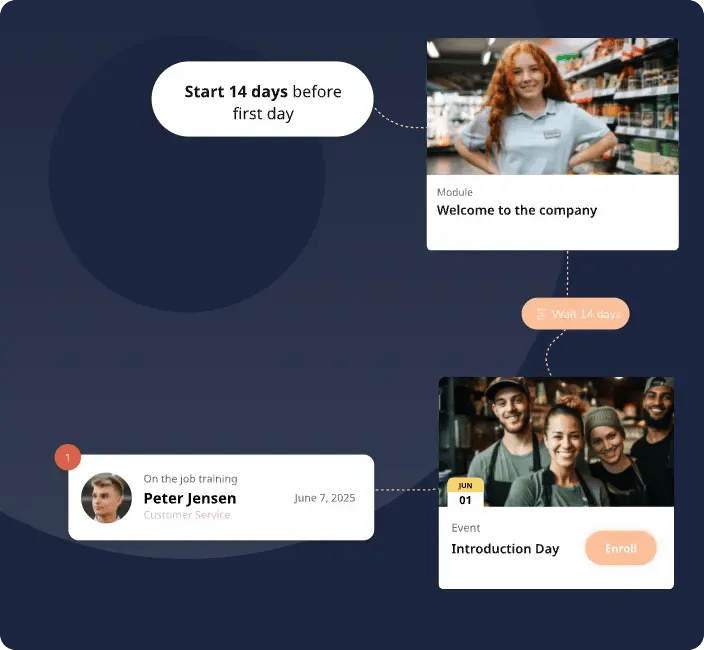 Image: A great tip for onboarding enablement is using the Workforce Enablement Platform to automate onboarding journeys with blended learning.
2. The retention enablement gap: Learning exists, growth doesn’t
Research shows up to 90% of new knowledge is forgotten within a week without reinforcement. When knowledge doesn’t stick, people don’t feel competent, confident, or future-ready, which are some of the strongest drivers of engagement and retention (elearningindustry.com).
People rarely leave because they watched too few videos. They leave because they feel unprepared, stuck, or uncertain about their future.
You might already have:
-
Learning content.
-
Occasional workshops.
-
General “development” initiatives.
But without clear, role-specific development paths and visible progress, growth feels vague. And when growth feels unclear, turnover follows.
Workforce Enablement connects learning to:
-
Transparent skills and development paths.
-
Manager follow-up and coaching prompts.
-
Concrete milestones tied to roles and performance.
That clarity changes behavior and loyalty. Employees see a future, feel invested in, and stay longer. Especially in industries where frontline turnover is a constant battle.
3. The performance & operations enablement gap: Training exists, execution doesn’t
Training and processes exist, but KPIs still differ by team and site because skills are taught once, then fade. Only 10–20% of training actually transfers to job performance
Research indicates that without systematic support (enablement), only about 10–20% of what’s learned in training is applied on the job in meaningful ways.
Typical signs:
-
Some teams excel, others lag, with the same training.
-
“How we do it” changes by person or shift.
-
Managers lack visibility into what’s actually followed.
-
Local process “versions” appear.
-
Efficiency, rework, and quality vary by site.
Enablement closes this gap by for example:
-
Embedding mobile refreshers and microlearning in daily work.
-
Giving managers data on who needs support and when.
-
Making knowledge available to the right roles at the right time.
-
Linking learning and process adoption to KPIs like output, errors, and downtime.
Result: fewer surprises, less variation across teams and locations, and scalable, everyday operational consistency.
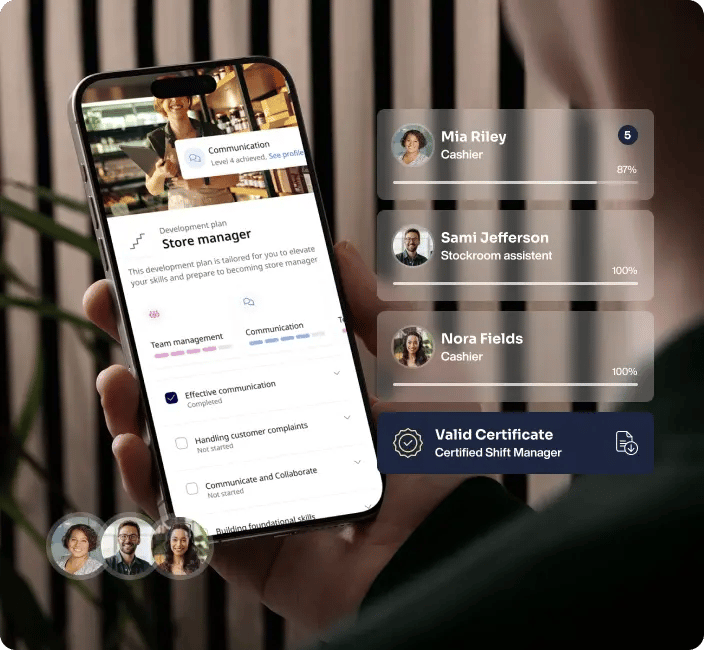
Image: Equip employees and managers with clear development plans and activity lists for their daily work to avoid performance gaps and inefficient learning. Empowering managers is key.
4. The sales & service enablement gap: knowledge exists, performance doesn’t
Sales and service teams often know the products and the standards — but in real customer conversations, that knowledge doesn’t always show up. Messages vary by store and shift, confidence drops when talks go off-script, and new hires struggle under pressure.
Workforce enablement closes this gap by:
- Using interactive, scenario-based training that mirrors real customer situations.
- Giving mobile, just-in-time access to product, pricing, and service knowledge.
- Reinforcing key behaviors and principles continuously in the flow of work.
The result: more confident conversations, more consistent experiences, faster resolutions, and higher customer satisfaction and loyalty.
5. The compliance enablement gap: Certificates are completed, yet incidents or breaches still happen
Only about 10 % of employees say their compliance training actually changed how they do their work (Gallup). Most compliance programs have little impact on real behavior unless they go beyond basic learning and embed reinforcement, application, and enablement.
Compliance often stops at checkboxes:
-
Courses completed.
-
Certificates stored.
-
Reports generated.
But if real-world behavior isn’t verified and supported, risk doesn’t go away.
Workforce enablement for compliance means:
-
Making training relevant, scenario-based, and role-specific.
-
Reinforcing critical behaviors over time, not just once a year.
-
Connecting completion data with real audits, incidents, or safety metrics.
This shifts compliance from “necessary cost” to “risk reduction engine”, and creates safer, more reliable operations.
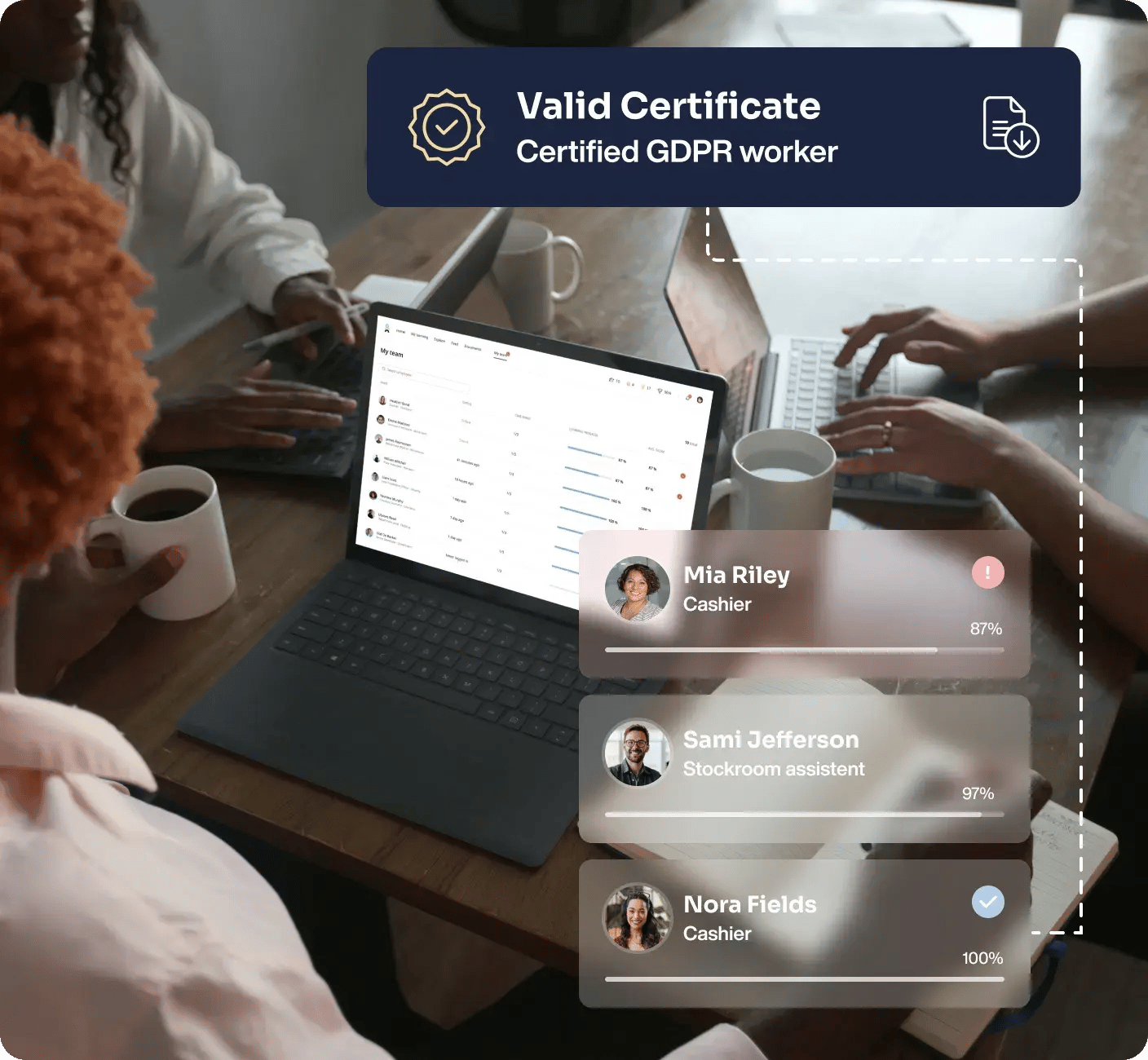
Image: Learn how we help companies with compliance using Workforce Enablement and not just completed courses.
One root cause for any enablement gaps in workforces: Learning stops at completion
-
Different gaps. Same root cause.
-
Learning stops at completion.
-
Enablement is missing.
When training is treated as an event instead of a continuous, embedded experience, performance never becomes reliable. You get effort without impact, content without behavior change, and platforms without clear business results.
Workforce enablement changes that by:
-
Aligning learning with concrete business outcomes.
-
Automating learning journeys, and connecting it to operations, across the entire employee journey.
-
Making knowledge available anytime, anywhere, on any device.
-
Connecting learning data to real performance, turnover, and revenue metrics.
-
Organizations that embrace workforce enablement don’t just “do more training.”
And that’s where the real, proven impact shows up: in faster ramp-up, lower turnover, better customer experiences, stronger safety, and more reliable results across every team and location.
Want to learn more about Workforce Enablement? Check out how we help companies with the Workforce Enablement Platform.