
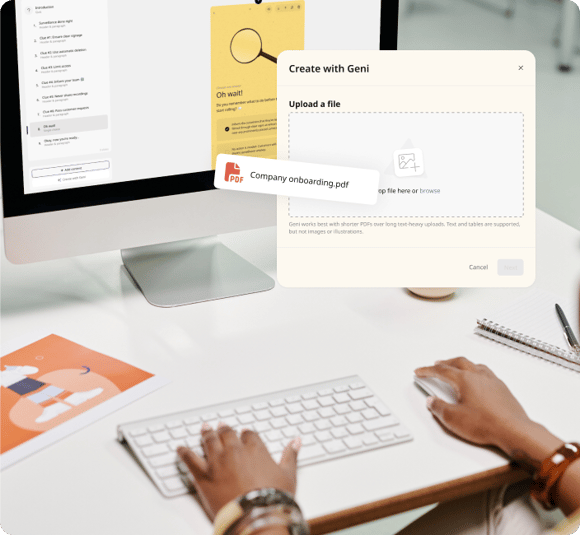
AI is changing how learning content is created. Not by replacing L&D teams, but by removing the friction that has slowed them down for years. Content creation has long been the biggest bottleneck in corporate learning. Slow production, difficult updates, and poor scalability have limited impact. AI is now starting to change that.
AI-assisted content creation (faster module building)
Many L&D teams are overwhelmed by manual work. Large backlogs of content and long production cycles make it difficult to keep up with business needs. It is not uncommon to see teams spending 60 to 80 hours on a single module while hundreds more are waiting.
In practice, many teams already use AI. But they use it outside their systems. They copy content into external tools, generate drafts, and move it back again. This creates friction and slows the process.
When AI is built into the workflow, the dynamic changes. Teams can generate structure, copy, and questions instantly. Instead of building content from scratch, they refine and improve. This shifts content creation from slow production to fast iteration.
AI for translation and multi-language content
For organizations operating across countries, translation is a constant challenge. Content needs to exist in multiple languages, and every update creates additional work. Manual translation and proofreading take time and slow down rollout.
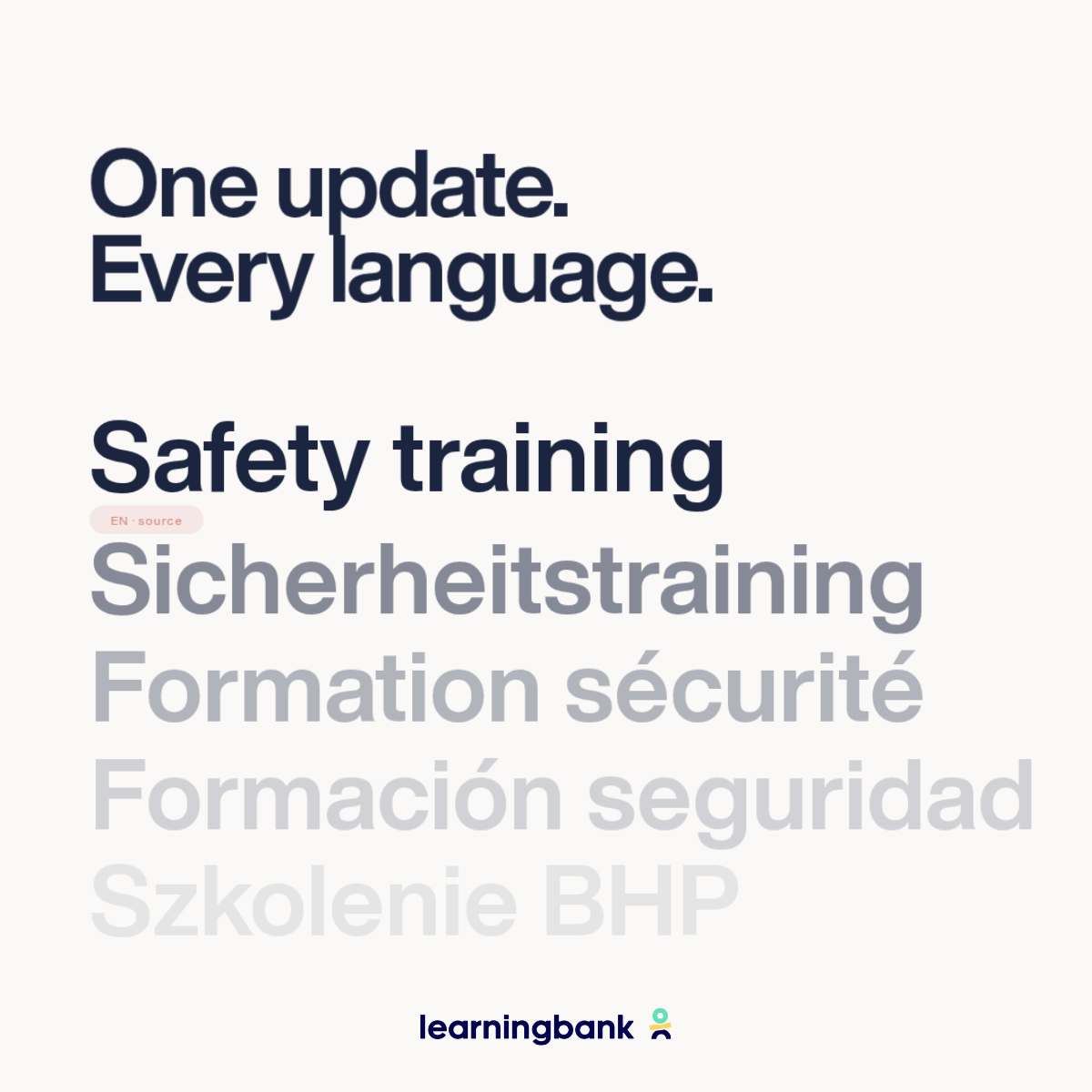
A common situation is that updates overwrite existing translations. Teams are forced to redo work they have already completed. This creates inefficiency and delays.
AI changes this process. Content can be translated instantly, and only updated sections need to be revised. Existing translations can be preserved and improved. This makes it possible to scale learning across more languages without increasing effort.
AI to turn long documents into microlearning
Most organizations already have large amounts of content. Policies, compliance documents, and internal guidelines exist, but they are often difficult to use. Long, text-heavy formats make it hard for employees to engage and apply what they read.
A typical example is a code of conduct stored as a long PDF. Employees are expected to read it, but very little is retained or applied in practice.
AI makes it possible to transform this content. Long documents can be broken into smaller, structured modules. Sections, questions, and summaries are generated automatically. This makes content easier to consume and more relevant to daily work.
AI quality and UX issues (lessons learned)
AI introduces new opportunities, but also new challenges. Some teams experience content that is too generic or not aligned with their tone. Others see issues with translation quality or overly fragmented content.
For example, AI-generated courses may include too many slides with too little substance. Or translations may require heavy manual correction in certain languages.
The key lesson is clear. AI needs direction. The most effective teams use AI on top of their own content and context. They guide it with real materials, real scenarios, and clear expectations. This ensures that speed does not come at the cost of quality.
AI for knowledge access and internal knowledge bots
Creating content is only part of the challenge. Accessing it is just as important. In many organizations, knowledge is spread across systems, folders, and documents. Finding the right answer takes time.
A common scenario is that employees ask colleagues or managers for help instead of searching for information. This slows down operations and creates dependency.
AI changes this by making knowledge accessible. Employees can ask questions and receive answers based on internal content. The AI assistant pulls from existing materials and provides relevant guidance in real time. This reduces friction and improves efficiency.
AI-ready platforms vs legacy tools
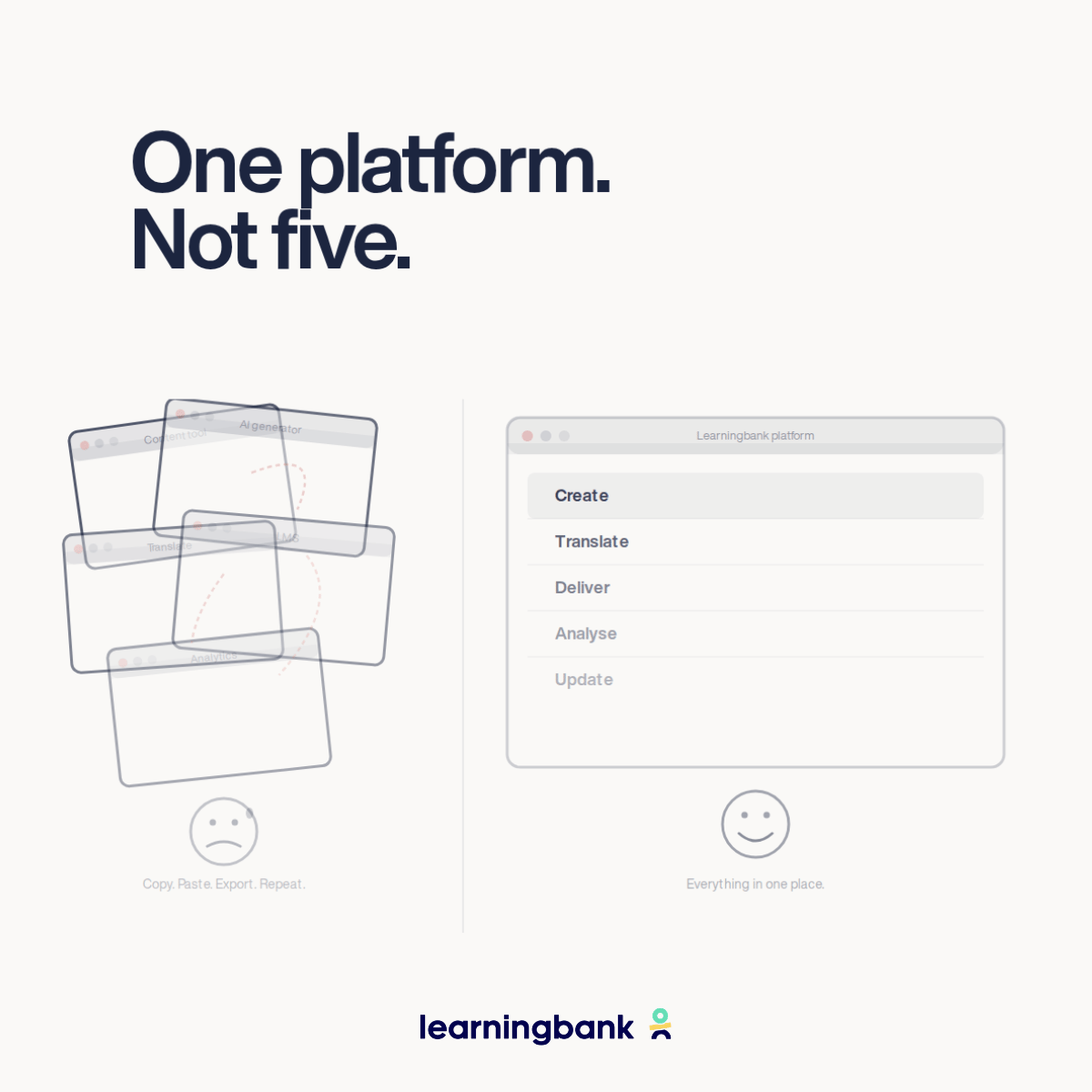
Many existing systems are not designed for this way of working. AI is often added as an external layer rather than integrated into content workflows. This creates complexity and fragmentation.
Organizations often use multiple tools for content creation, AI, translation, and delivery. This leads to manual work and disconnected processes.
The shift is towards platforms where AI is native. Content creation, translation, and knowledge access are connected in one environment. This reduces complexity and enables faster, more consistent workflows.
AI-supported content operations and governance
The biggest change AI brings is not just faster creation. It is how content is managed over time. Content is no longer a one-time deliverable. It becomes a continuous process.
Organizations need to keep content updated, relevant, and aligned with business needs. This is difficult when content libraries grow and change frequently.
AI can support this by identifying outdated content, suggesting updates, and helping restructure large libraries. It also enables more people to contribute. Managers and subject matter experts can create content more easily, while L&D focuses on governance and quality.
The bottom line
AI is not just improving content creation. It is changing how learning content is created, managed, and used. It reduces manual effort, increases speed, and makes scaling possible.
But the real impact comes from how it is applied. Organizations that embed AI into their workflows can create more relevant content, keep it updated, and make it accessible in daily work.
This is where the transformation happens. From slow content production to continuous workforce enablement.